Skip to content

What You Need to Know about Food Allergies

Food allergies are common these days. In fact, the Centers for Disease Control and Prevention reported that food allergies among children increased approximately 50% between 1997 and 2011.[1]

No one knows why food allergies are increasing, although several theories exist. This leaves doctors and scientists unsure about what to recommend in order to prevent them.

In contrast, Traditional Chinese Medicine (TCM) has a strong grasp of allergies. From a TCM perspective, many allergies are caused by a Wei Qi imbalance. Wei Qi is similar to the Western medicine view of the immune system; Wei Qi defends the body against foreign substances.

And unlike Western medicine, TCM recommendations for food allergies are always individualized. Your specific diagnosis impacts your treatment plan and how you will balance your immune system.

Until you get a personal diagnosis, use these tips to control your food allergies.

  • See an allergist and get tested to learn exactly what you are allergic to.
  • Avoid your food allergens, especially if you are exposed to multiple allergens at once. For example, you may be more sensitive to your food allergens when you have hay fever.
  • he most common food allergens are peanuts, the proteins in cow’s milk, shellfish, tree nuts, fish, eggs, gluten, wheat and soy. These are good foods to avoid if you don’t know exactly what you’re allergic to.
  • Ask about ingredients when you eat at restaurants or when your meal is prepared by someone else. Don’t be shy to get specific.
  • Read labels to make sure there aren’t any “hidden” ingredients you’re allergic to.
  • Sometimes people outgrow food allergies. Talk to your allergist to get tested if you believe you’re no longer allergic.
  • Eat foods that nourish your immune system. Cauliflower, Asian pears, water chestnuts and white cabbage are good antioxidants and support your Wei Qi. Be sure to eat both omega-3 and omega-6 fatty acids. These fatty acids are found in salmon, tuna, mackerel and other cold-water fish.

[1]http://www.cdc.gov/nchs/data/databriefs/db121.htm

Dandelion Pesto

Makes 2 cups

  • 12 ounces washed and cleaned dandelion leaves
  • 1 cup olive oil
  • 4 cloves garlic, peeled
  • 6 tablespoons pine nuts, lightly toasted
  • 1 1/2 teaspoons sea salt
  • 2 1/2 ounces Parmesan or Romano cheese, grated
  1. Put one-third of the dandelion greens in a food processor or blender with the olive oil and chop for a minute. Add the remaining dandelion greens in two batches until they’re finely chopped.
  2. Add the garlic, pine nuts, salt and Parmesan, and process until everything is a smooth puree.
  3. Taste; add more salt if necessary.  Thin with olive oil or water if needed.

Storage: The pesto can be refrigerated in a jar for up to 4 days or frozen for up to 2 months.  To prevent the top from darkening pour a thin layer of olive on top.
Posted in | Tagged , , | Comments Off on What You Need to Know about Food Allergies

Acu 101: The Eight Principles

When you go to an acupuncturist, have you noticed that the way they describe your illness is different than the way your doctor describes it?

Traditional Chinese Medicine (TCM) looks for patterns of imbalance. Identifying these patterns allows your acupuncturist to form a TCM diagnosis and leads to your treatment. Because of this, illnesses that western medicine considers unrelated may be considered similar by your acupuncturist.

There are several systems for viewing these patterns. One of them is called the Eight Principles. In this system, four sets of qualities help define your illness.

  • Interior/Exterior. Your acupuncturist will look at your illness and determine if it is located in an interior organ or if it is caused by an exterior pathogen.
  • Hot/Cold. Your acupuncturist will determine if your imbalance is hot (like a fever) or cold (like chilliness).
  • Full (excess)/Empty (deficiency). Your acupuncturist checks the strength of your Qi and whether there is a pathogen present.
  • Yin/Yang. Your acupuncturist determines if your condition is primarily yin or yang in nature.


How can the Eight Principles Help You?

If you’re not familiar with TCM, getting a diagnosis of “excess heat in the interior” won’t mean anything to you. But remember, the Eight Principles are patterns of imbalance.

Ask your acupuncturist what your diagnosis means. Then ask what symptoms point to that diagnosis.

Start observing your everyday complaints, aches, pains and health challenges. Notice if you regularly have symptoms that point to the diagnosis. It’s likely that you will start to see patterns in your symptoms, even if western medicine doesn’t understand the links between them.

Once you know your constitutional tendencies, you can begin a long term plan to balance your body and prevent illness.

Posted in | Tagged | Comments Off on Acu 101: The Eight Principles

Can You Use Acupuncture for Weight Loss?

weight-loss-03102014Everyone is looking for the secret to weight loss, without falling victim to the latest gimmicks. With so many different opinions about how to lose weight, it can be difficult to tell what will really work.
Fortunately there is a technique for weight loss that has been tested for centuries:  acupuncture.

This technique is safe, sound and reliable. And, even more exciting, using acupuncture for weight loss helps you lose weight in several different ways. continue reading »

Posted in Acupuncture, Nutrition, Wellness | Tagged , | Comments Off on Can You Use Acupuncture for Weight Loss?

The Definitive Guide to Chronic Fatigue and Alternative Treatments

sleepy-owlChronic fatigue syndrome (CFS) is a mysterious condition. There is no known cause. While the symptoms can be debilitating, there is no test to diagnosis it. Women are twice as likely as men to be diagnosed with CFS. And most sufferers are between 25 and 45 years old, although there are cases in childhood and middle age.
Some people with CFS live active lives while 25% of the cases are disabled. Sometimes the disease is persistent and other times there is a pattern of relapse and remission. No one knows how many cases there are of CFS because The CFIDS Association of America estimates that fewer than 20 percent of CFS patients in the United States have been properly diagnosed.

CFS has several names. It is called Myalgic Encephalomyelitis (ME), chronic fatigue and chronic fatigue immune dysfunction syndrome (CFIDS).  No matter what it is called, the most effective way to manage chronic fatigue is with alternative treatments. continue reading »

Posted in Acupuncture, Wellness | Tagged | Comments Off on The Definitive Guide to Chronic Fatigue and Alternative Treatments

Aromatherapy

aromatherapy

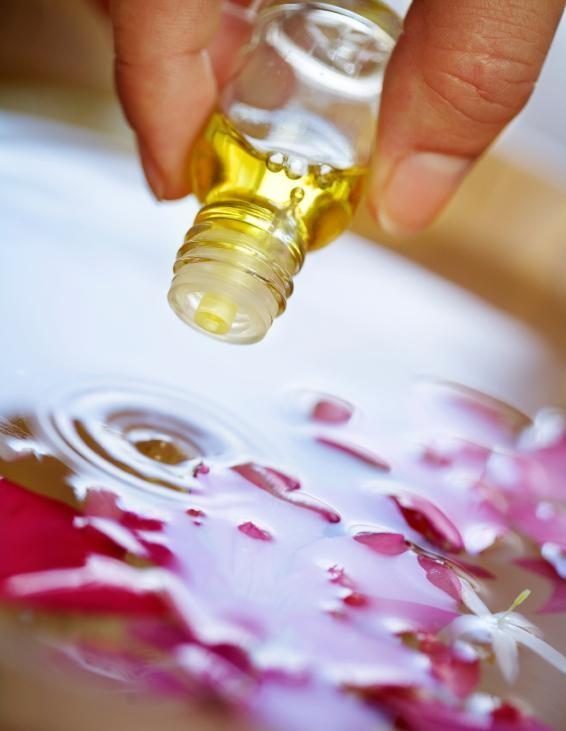
Aromatherapy. How to use essential oils.

Aromatherapy is claimed to be a rather affective and extremely pleasant method of preventing and treating diseases. No wonder, that it gains more and more popularity. We know that aromatherapy is based on using essential oils also known as aroma oils. But not many people are familiar with the fact that besides of aroma lamps, these magic oils can be used in many different ways.

Individual approach
First of all, you should remember that aromatherapy is an individual therapy. Each person has associative links to certain smells, these associations can be both positive and negative. Besides, individual approach is particularly relevant in light of the allergic reactions to drugs, foods or cosmetics, occurring quite often today. Although the cases of allergic reaction to aroma oils are infrequent, pay attention to your feelings when breathing oils.

There are different ways to use essential oils. Essential oils penetrate the human body differently. Thus, all application methods can be divided into three groups:

1. Methods which influence olfactory system and the respiratory system (inhalant methods).

Cold inhalation

• Inhaling essential oils directly from the bottle or a medallion.
Add 1-3 drops of essential oil into ceramic medallion. Medallion with essential oil can be worn on your neck or in a breast pocket. For greater effect, you can periodically bring the medallion to the nose and inhale the scent.

• Using a handkerchief. Put 1-4 drops of essential oil to the edge of a handkerchief. Bring the handkerchief to your nose and breath. Do it several times a day (from 2 to 10 times).

• Using a pillow. Put 1-4 drops of essential oil to the edge of the pillow. When using this method, it is desirable to apply relaxing and sedative oils. Stimulating oils can give an undesirable effect.

Hot inhalation. This method is based on inhalation of vapor saturated essential oils. Take a bowl and fill it with boiling water. Cover your head and shoulders with a thick towel, and only then add essential oils to the bowl. Start with 1-2 drops per pint of water. Later you can add 3-5 drops. Do not use hot inhalation if you suffer from acute pneumonia, asthma, acute purulent inflammation of the mucous membranes or cardiovascular disease.

Aroma lamps or aromatic fireplace. These are the most widespread tools for aromatherapy today. All you need to do is turn on the lamp or a fireplace and add several drops of aroma oils.

Inhalation using special apparatus. For instance, aroma oils can be sprayed with the help of ultrasound.

Individual perfume. Today you can order an individual perfume containing your favorite essential oil.

2. Transdermal methods (through the skin).

Aromatherapy bath is an effective procedure. It is necessary to take a shower before taking a bath. Choose any temperature regime that you like. Essential oils must be diluted in an emulsifier: honey (1 tbsp), 150 ml of dairy products (milk or yogurt), sea salt (2-3 tbsp) or bubble bath. The first procedure should take 5-10 minutes, the optimal time spent in the bath is 15-20 minutes. The first bath should contain 2-3 drops of essential oils, later increase the dosage to 6-10 drops. Take a bath every other day or every day. A prophylactic course consists of 5-7 baths and therapeutic course – of 10-15 baths.

Aromatherapy massage is one of the most successful methods of aromatherapy. It differs from other types of massage and has a special technique. However, a mixture of essential oils can be used in various massage techniques to improve the efficiency of the massage treatment.

Aromatic water. Add 3-5 drops of essential oils to 0.5 liters of purified water, shake the bottle. After taking a shower, rub water into the body.
Skin lotion, cream and cosmetics. Adding aroma oils to favorite cosmetics is a widespread and rather effective method.

3. Methods which influence on the mucous membranes of the nasal cavity, mouth, gastrointestinal tract, genitourinary system.

Mouth and throat rinsing. Add 1-4 drops of essential oil to a cup of warm water. Use 1 teaspoon of honey as an emulsifier. Rinse several times a day. Do not eat or drink for 15-20 minutes after rinsing.

Tea. Put 100 g of dry tea in a glass jar, add 10-20 drops of essential oils: orange, lemon and bergamot. Leave it in a dark place for 14 days. Shake the jar daily.

Essential oils can be also used in alcohol drinks, mineral water, nasal drops and enemas. You can even add aroma oils to a toothbrush.

Whatever method you choose, be careful and attentive when using this amazing therapy. Be healthy!

About the author: Melisa Marzett is an experienced writer. This young and active girl works on such topics as healthcare, cosmetology and fashion. Melisa also writes for best essay writer. Find more information at Google+.

PICTURE: http://www.hcplive.com/_media/_upload_image/_thumbnails/aromatherapy.jpg

Posted in Uncategorized | Comments Off on Aromatherapy
914-632-1896